Linguistics
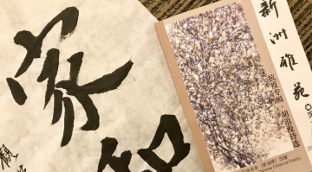
Of the many arts, Chinese calligraphy and linguistics are among the most popular and highly respected. You can hear Chinese people learning from one another and discussing how best to pronounce words and how they should be written in parks.
Old men stand around for much of the day in leafy parks debating and ‘painting’ characters on the ground using a sort of mop head tied back and a bucket of water. A crowd will gather, discuss and try various strokes and methods all trying to find the best or most elegant style. It's worth watching.
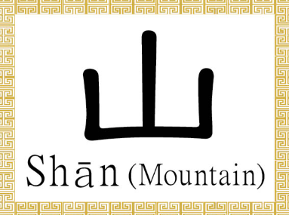
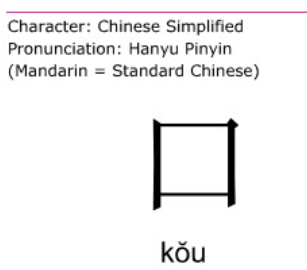
Each Chinese character is a depiction, a representation, of sorts. You can make out the beauty and meaning of the character in its shape. For example, mouth/opening (Kou) is shown by a type of square character (rather like an open mouth), whereas mountain (Shan) is like an upside-down ‘W’ which resembles a set of mountain-range peaks.
The art of Chinese linguistics is an ongoing source of great fascination for Chinese people. You will be adored if you make a reference to the greatness of their language. Thankfully, modern Chinese (unlike traditional script) uses Western numerals (1,2,3…).
On the subject of language, you may also be surprised to hear how loudly Chinese sometimes speak to one another. In some provinces this can be deafening and can be easily confused for a dispute if you're not aware of the local volume levels!
Most likely, they are sharing a joke or just getting own to bargaining. Best not to copy them, as they are well aware that this is a Chinese attribute special to their linguistic expressiveness.
One final thing on calligraphy. Grabbing a calligraphic souvenir is a nice gift to take home. Often such shops are found in tourist traps or in vintage shop areas. You may need to ask a local on where exactly to find these places.