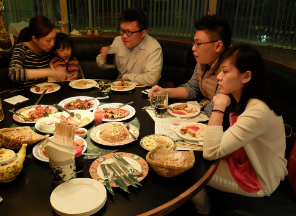
Eating with friends
Like many other cultures around the world, it is common courtesy in China to stand as a welcome to the dinner table should guests arrive. This is also the case when leaving the table for good.
Chinese restaurants usually have many small private rooms as well as an open dining area. Large round tables with revolving glass tops are the norm, which makes trying all the delicious food a pretty easy task. During the meal there are surprisingly few rules on etiquette. At even informal meals, you are expected to wait for all the guests to arrive before getting started.
In a private room the guest of honour (usually a leader, CEO, birthday person, family elder, etc) should be seated furthest from the main door. In nicer eateries the waiters will set out the seating plan for the guest of honour, who will find their serviette, or napkin, folded in a more elegant fashion from everyone else’s. At some point throughout the meal (on formal occasions or when new distinguished guests are present) a toast and speech, a toast to all or an individual toast to selected guests in the room will take place. At a works dinner after the dishes have been served, you could have a myriad of diners cheersing each person around the table. Be sure to cheers the leader or person with the highest honour first!
At formal dinners, there'll probably be 'baijiu' on the table. With reasonable excuses you can use beer or soft drinks but the norm is most definitely to toast with this happy but lethal stuff. Should the main guest of honour speak it is also essential that you listen intently and avoid talking or whispering to your neighbour at the same time. It's very disrespectful.
When it’s time to go, everyone seems to leave quickly and simultaneously. On leaving, handshakes that seem to last several minutes as a dialogue of mutual friendship is put forward accompanied with a short speech of what a great time they’ve had, may occur. The British for example, like handshakes to be swift and firm, whereas the Chinese will hold onto your hand for some time to show true sincerity. This is meant in the friendliest possible way and should be treated as such. Prolonged handshakes are meant as a sign of deep affection and , lasting friendship. The problem worsens the more that is drank though. Sometimes they won’t want to let go of your hand for a while which can be worrying if you just want to get away.
(See also these three other relevant sections: Baijiu, Eating habits and Paying for meals).